
With the official May 12, 2026, release of Suicidal Empathy: Dying to Be Kind, Dr. Gad Saad has once again ignited a firestorm of debate across the United States. Following the massive success of The Parasitic Mind, Saad—an evolutionary psychologist and professor—delves deeper into the psychological frameworks that he believes are leading Western civilization toward a state of self-destruction.
For readers and students looking to navigate these complex social theories, this digital guide provides a deep dive into the book’s core arguments, chapter breakdowns, and instructions on how to access the full digital resource for your research.
What is “Suicidal Empathy”?
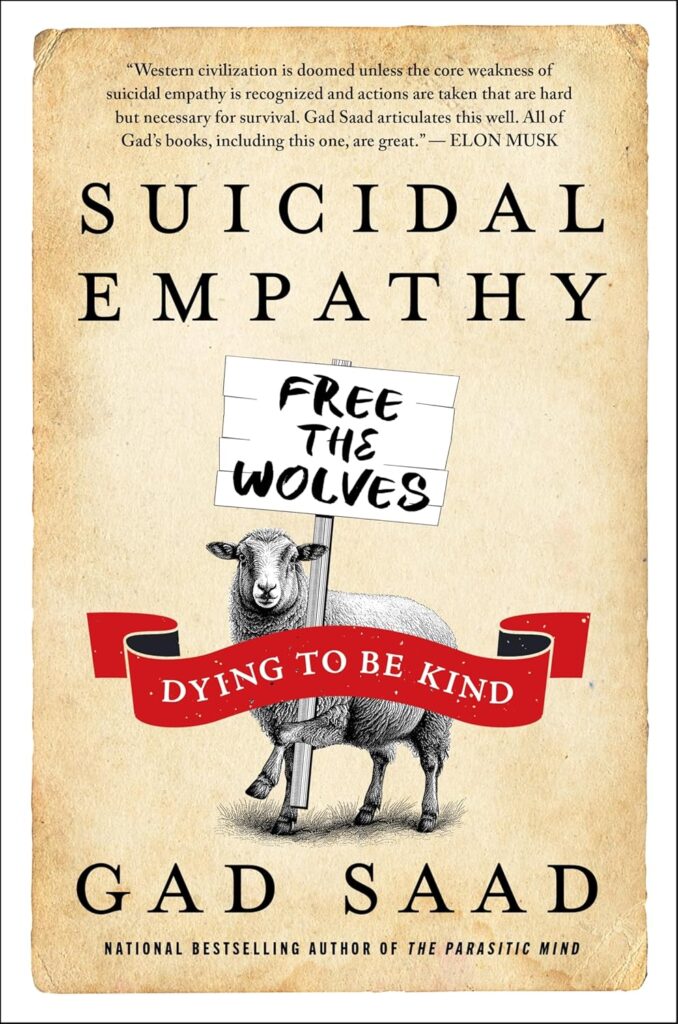
The central premise of the book rests on a startling observation: empathy, usually considered the “glue” of a healthy society, can be weaponized against the very people who practice it. Saad argues that when empathy is miscalibrated or applied to groups or ideologies that seek to dismantle the host society, it becomes “suicidal.”
In the American context, this resonates deeply with current debates over border security, criminal justice reform, and academic freedom. Saad uses his background in evolutionary psychology to explain that our brains were evolved for small-tribe survival. When these ancient instincts are applied to a massive, globalized digital world, they can be easily manipulated by “idea pathogens.”
Core Pillars of the Book
To understand the “Digital PDF” version of these arguments, one must look at the three primary pillars Saad establishes:
- The Altruism Trap: Saad explores how “pathological altruism” leads individuals to support policies that actively harm their own communities. He argues that the desire to “be kind” has overridden the instinct to “be safe” or “be rational.”
- The Victimhood Hierarchy: A significant portion of the book is dedicated to how Western institutions have created a “caste system of grievance.” He posits that by prioritizing perceived victimhood over objective merit, we are eroding the foundations of excellence that built the West.
- The Ostrich Effect: This refers to the collective refusal to acknowledge uncomfortable truths for fear of being labeled “unempathetic.” Saad encourages a return to “Reason-Based Compassion” rather than “Emotion-Based Suicide.”
Why This Title is Trending in the USA
Since its release this morning, search volume in states like Texas, Florida, and New York has skyrocketed. The book has become a focal point for the 2026 political cycle, serving as a handbook for those who feel that “common sense” has been abandoned. For students and researchers, the “Digital Version” is highly sought after for its searchable data on evolutionary biology and social statistics.
Detailed Chapter Analysis for Researchers
- Chapter 1-3: Focuses on the biological roots of empathy and how it served us in the ancestral past.
- Chapter 4-7: Transitions into the “Maladaptive” phase, showing where these instincts began to fail in the modern era.
- Chapter 8-10: Provides the “Cure”—Saad’s roadmap for reclaiming a rational society through intellectual courage.
How to Access the Full Digital Version (PDF & E-Book Guide)
Given the massive demand for Suicidal Empathy: Dying to Be Kind, many users are seeking immediate digital access to begin their analysis. To help you get started with the full text and research materials, follow this standardized digital access protocol:
- Step 1: Regional Verification. Click the “Access Digital Resource” button below. This ensures your IP is within the USA/Canada/UK distribution zone for educational previews.
- Step 2: Analysis Pack. Once verified, you will be redirected to our full analysis pack, which includes a 40-page executive summary, an ideological glossary, and the complete reading list.
- Step 3: Direct Access. Follow the instructions on the next page to learn how to legally sync the PDF version with your Kindle, Nook, or tablet via authorized digital lending platforms.
Conclusion: Reclaiming the Narrative
Gad Saad’s Suicidal Empathy is more than just a book; it is a cultural movement. Whether you agree with his evolutionary perspective or find his critiques too sharp, the influence of this work on the 2026 social landscape is undeniable. By utilizing our digital guide, you ensure that you have the most up-to-date information and summaries at your fingertips, allowing you to engage in the conversation with logic and facts.